

Questions to Ask Before You Build on Your Land
Ten questions that come up before almost every build. Answered straight.
“The best home decisions I've been part of were made by people who did the research together. When one person does all the homework and tries to sell everyone else on it, somebody ends up feeling dragged along. That costs everyone later.”
John Piazza Norton, Founder, DreamStart Building Company
Bottom Line Upfront
Ten questions come up before almost every build: total cost, financing, builder reliability, life during construction, budget overruns, looks, resale, size, insurance and whether buying an existing house makes more sense. Each one has a direct answer. Vague reassurance doesn't help. Specific, documented answers do.
The 10 Questions, Answered
Financial reality
"What does this actually cost, all in?"
A fully finished SIP Homestead Shell in Missouri runs $130 to $185 per sq ft all in. A 2,000 sq ft home: $260,000 to $370,000. The shell is 35 to 45% of that. The rest is foundation, utility rough-in and interior finish. The $30 to $50 per sq ft figures you see online are shell only, not livable homes.
Financing
"Can we get a loan?"
Yes. SIP Homestead Shells built to IRC residential code qualify for conventional, FHA, USDA and VA construction loans. The key is documentation: engineered drawings, proof of residential classification and a complete package for the lender. One 30-minute lender conversation will tell you what you qualify for.
Builder risk
"What happens if the builder doesn't finish or disappears?"
That risk exists with any contractor. Protect yourself: verify the Missouri business registration at sos.mo.gov, confirm general liability insurance, get a written warranty, tie payment draws to milestones (never big lump sums up front) and check references from finished projects. A milestone payment schedule is your main financial protection.
Life during the build
"Will we have to live on a construction site?"
No. Most owners stay in their current home through construction. The usual order: sign, drawings and permits (8 to 12 weeks), site work and slab (4 to 6 weeks), shell assembly (3 to 5 days once your site, panels and builder are in place), interior finish (4 to 8 months). You move in when it's done.
Budget overrun
"What if the project goes over budget?"
Overruns are real in construction. Protect yourself: get a fixed-price contract for the shell (not time and materials), include a written exclusions list, build a 10 to 15% contingency into your total budget and avoid changes after signing. Itemized shell pricing is more predictable than a vague all-in quote.
Looks
"Will it look like a barn instead of a house?"
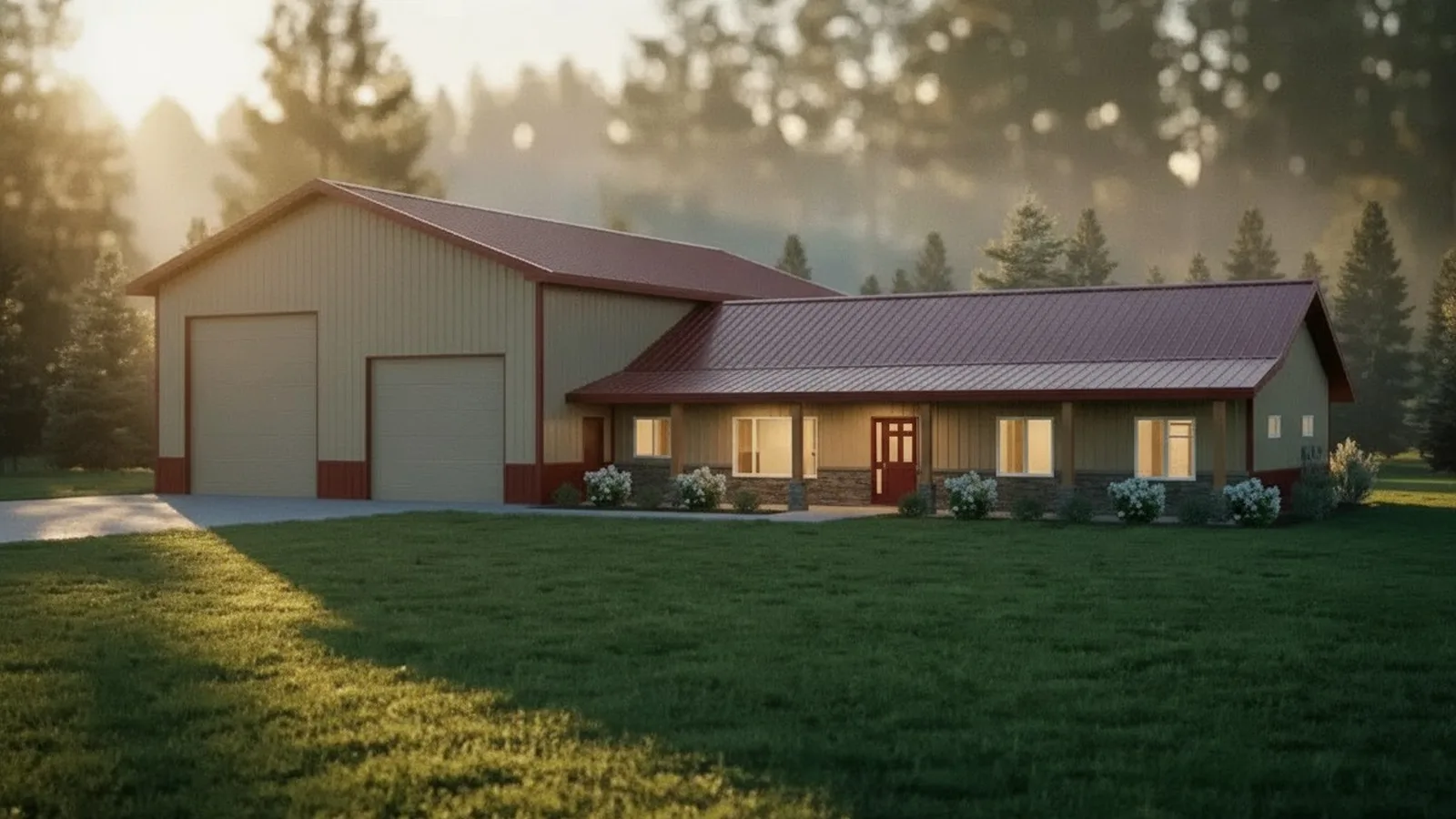
Only if you build it that way. A SIP Homestead Shell can look like a custom home from the road: covered porches, board-and-batten siding, real rooflines and landscaping. The warehouse look is a choice, not a given. Walk a finished home to see what's possible.
Resale value
"What if we want to sell in 5 to 10 years?"
Rural Missouri barndominium values are rising. The resale risk is the appraisal comp gap: rural appraisers need comparable sales. Building to residential IRC code, getting a HERS rating and choosing land with at least 5 acres all help resale.
Size
"Is this too much house?"
DreamStart's linear-foot pricing means you control the footprint. A 1,500 sq ft single-level home has everything on one floor, with no stairs, ever. You don't need 4,000 sq ft to get the benefits of SIP construction. Start with the space you'll use.
Insurance
"What about insurance?"
SIP Homestead Shells built to IRC residential code insure as custom homes, not barns. Carriers that insure rural custom homes will insure these. Describe it as a custom home with a steel roof, not a 'barndominium.' Rates are comparable to stick-built custom homes in similar rural areas.
Other options
"Why not just buy an existing house?"
You can. But in rural Missouri, existing homes that fit your space and location are rare and often cost more than building. Building gets you a custom home, on land you chose, in a layout the resale market doesn't have. That's the whole point.
Frequently Asked Questions
What does it really cost to build a barndominium, fully finished?
A fully finished barndominium in Missouri (foundation, utilities, interior finish and the shell) runs $130 to $185 per square foot in 2026. A 2,000 sq ft finished home costs $260,000 to $370,000 all in. The $30 to $50 per square foot figures you see online are shell only. They don't include the foundation, utilities or anything inside the walls.
Will a barndominium hold its value if we need to sell?
Barndominiums built to IRC residential code on rural acreage (5+ acres) are appreciating in Missouri. The challenge is appraisal comparables: rural appraisers need similar homes that sold nearby. A SIP Homestead Shell built to residential code, with a HERS rating, is classified as a custom home rather than a barn conversion, which helps resale.
How disruptive is the construction process?
The shell takes 8 to 12 weeks and a fully finished home takes 6 to 12 months in total. Most owners stay in their current home until the certificate of occupancy is issued. The disruption is mostly budget meetings and coordination, not moving out.
About DreamStart
We used to build barndominiums and homestead shells with our own hands, and that experience is exactly what taught us where the real value lies: in getting the design right, planning the build carefully, and working successfully alongside local builders hired by owners. That hands-on experience helps us prepare clearer planning and handoff materials, but it does not make DreamStart the party choosing your contractor. DreamStart now operates as a pre-construction planner and design advisor, not a builder, general contractor, installer, or construction manager. We produce your custom drawings and documentation, coordinate engineering only when your county or lender requires it, and guide site-readiness and logistics. DreamStart designs the plans, organizes the steps, and quotes the EPS panel price; your local builder buys the panels directly from EPS at that price and sets them. We do not self-perform or include general-contractor labor, excavation, foundations, shell erection, utilities, or finish-out. That work is performed by your local builder and trades you retain, contract, and pay directly. We help you find a general contractor and hold a three-way interview, then hand off a clear written plan. DreamStart does not perform or manage field construction; each owner independently selects, contracts, pays and schedules their contractors. Verify the GC's qualifications, insurance, permit requirements, and lender requirements with the appropriate local authorities and your lender.
Take the Next Step
Ready to Price Your Homestead Shell?
DreamStart designs the plans, organizes the steps, and quotes the EPS panel price; the local builder you hire buys the panels directly from EPS at that price and sets them. Your GC handles construction. Get your custom estimate free, no obligation.