


Illinois Homestead Shells: Single-Story Shell Homes & Barndominiums
Looking for a shell home builder in Illinois? We design your single-story shell home, quote the insulated EPS SIP panels your builder buys directly from EPS, and help you line up a local Illinois crew to set it. Solid foam-core walls and roof help keep heating bills down through long Illinois winters.
Free, no forms. Rather talk it through? Book a free call.
HOW A HOMESTEAD SHELL WORKS
A homestead shell is the strong, insulated outside of your home (walls, roof and exterior) set on a slab and weather-tight, ready for the inside to be finished. Same idea as a shell home or barndominium shell, built with SIP panels instead of studs.
We design it
A single-story plan sized to your budget and your land. One level, no stairs, on a slab. You keep the plans no matter what.
Panels ship to your site
Factory-cut EPS SIP panels (walls and roof) are made in Iowa and delivered to your Illinois job site. DreamStart is an EPS Authorized Dealer.
A local crew sets it
We help you find and vet a builder near your land. You contract with them directly. Once your site, panels and builder are in place, they usually have the shell weather-tight in 3 to 5 days.
BUILDING IN ILLINOIS AT A GLANCE
Panel delivery
Panels ship by truck from the EPS factory in Graettinger, Iowa. It's about 365 road miles to Rockford, about 385 to Quincy and western Illinois, about 410 to Peoria, and about 485 to Springfield and central Illinois.
Rural land
Illinois farm real estate averaged about $9,250 an acre in 2026, according to USDA. That's a statewide average for farmland and farm buildings; land near cities and towns usually costs more.
Sales tax on materials
Illinois's state sales tax is 6.25%, and local taxes add more depending on where you buy. Our calculator includes sales tax on materials based on your ZIP code.
Footings
Measured frost in Illinois has reached about 30 inches in far northern Illinois and only a few inches in the far south. Our standard is footings at least 36 inches below grade, or deeper where your county requires it.
The Lineup
Single-Level Homes Built for One-Level Living
Every design is one story, 1,500+ sq ft, on a slab with no stairs. Pick a starting point, then make it yours with your design package.
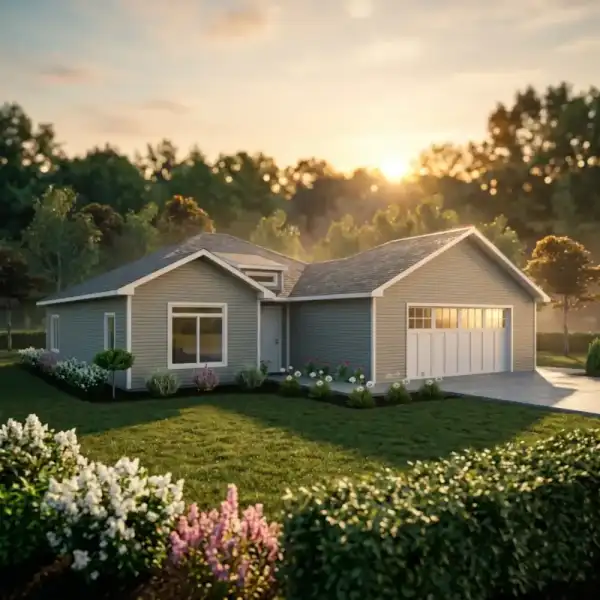
Taylor
1,680 sq ft · one level · 1 bed
Compact, with a 2-car garage
See the Taylor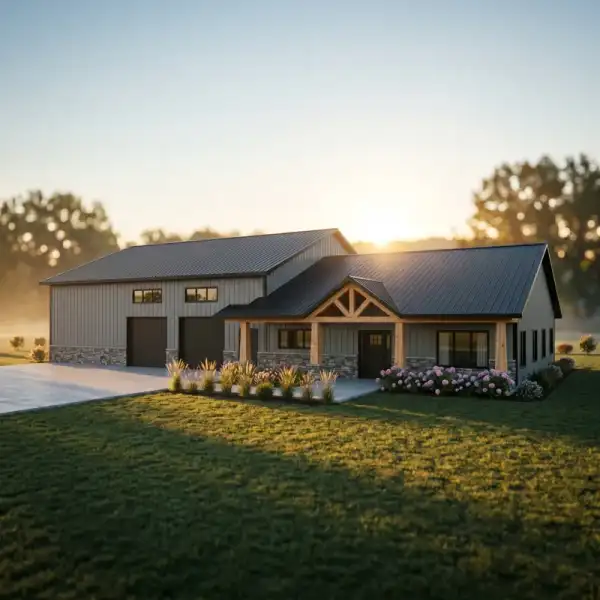
Oak
2,210 sq ft · one level · 3 bed
One level plus a 50x60 shop
See the Oak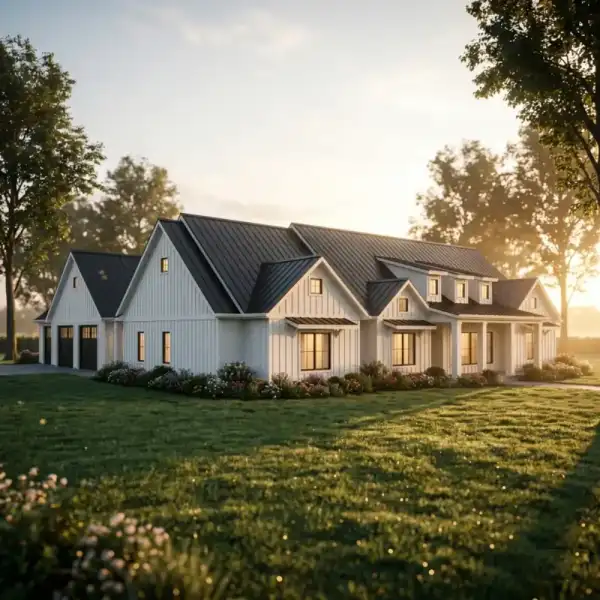
Jackson
2,814 sq ft · one level · 3 bed
Main-floor safe room and office
See the JacksonWHY SIP IN ILLINOIS: COLD-CLIMATE PERFORMANCE
Illinois runs nearly 400 miles from Chicago to Cairo, so frost depth, energy code details and the building season change a lot from north to south. Here's what matters for an Illinois shell.
Deep Frost, Planned For
Northern Illinois has some of the deepest frost in our service area: measured frost has reached about 30 inches in far northern Illinois and only a few inches in the far south. Your county sets the number, and your design package includes foundation details your slab contractor and inspector can work from.
Framed in About Half the Time
An independent RS Means study found SIP framing took 45 to 55% less time than stick-framing the same house. Once your site, panels and builder are in place, a local crew typically has the shell weather-tight in 3 to 5 days.
Meets the Energy Code
Illinois applies a statewide energy code based on the IECC. Most of the state is Climate Zone 5, where code walls typically need about R-20, or R-13 plus continuous insulation. Our standard SIP walls are rated around R-26 with no studs breaking up the foam, so they generally meet that without adding a separate insulation layer.
Prairie Wind, Tight Walls
Central Illinois prairie, from Champaign to Quincy, has little to break the winter wind. Drafty walls lose heat fast in that wind; solid foam-core SIP panels with sealed joints keep air leaks low. Most Illinois sites build from about April through October.
ILLINOIS PERMITS: CHECK WITH THE COUNTY
We haven't verified county permit rules for Illinois, and they change from one county and city to the next. Before you buy land, call the county (and the city, if the land is inside city limits) and ask these questions.
Ask the County (Rural Land)
Ask the City (Inside City Limits)
Your design package includes SIP engineering documentation for your county's permit office. Always confirm current rules with the county before you buy land.
FINANCING A HOMESTEAD SHELL IN ILLINOIS
You don't need a Missouri lender to work with us. Common paths for Illinois land:
Regional Illinois banks and credit unions regularly make construction-to-permanent loans for residential projects.
Much of rural Illinois is USDA-eligible. USDA's guaranteed loan offers no-down-payment financing, including a single-close construction-to-permanent loan through approved lenders, for households under the income limit. Check your land on USDA's map.
VA construction loans are another option; ask a VA-approved lender whether your project qualifies.
ILLINOIS QUESTIONS, ANSWERED
Do I need a permit to build a barndominium in Illinois?+
Usually, yes. Building permits come from your city, village or county, and some rural Illinois counties have not adopted a building code at all. Even then, state law still points new homes to the International Residential Code (or a nearby local code), and the statewide Illinois Energy Conservation Code applies to new homes everywhere. You'll also need a septic permit from your county health department if the land has no sewer, so check with your county before you buy land.
Can I finish the inside of my shell home myself in Illinois?+
Often, yes, but plumbing has strict rules. The Illinois Plumbing License Law lets you do the plumbing on a single-family home you own and live in, or are building to live in, as long as it meets the Illinois State Plumbing Code, may be inspected, and anyone you hire to help is a licensed plumber; the law expects you to live there at least 6 months. Illinois has no statewide electrical license, so whether you can do your own wiring is up to your city or county. Check with your local building department before you start.
What energy code applies to a new home in Illinois?+
Illinois has a statewide residential energy code, the Illinois Energy Conservation Code, set by the Capital Development Board. The current version is based on the 2024 IECC with Illinois amendments and took effect November 30, 2025. It applies to new homes whether or not your town or county has its own building code, so plan your walls, roof and windows to meet it.
Can I put in my own septic system in Illinois?+
Possibly. Septic systems must follow the Illinois Department of Public Health's Private Sewage Disposal Code, and local health departments review plans and issue permits. Many health departments will issue a permit to a person who owns and lives in the single-family home; otherwise a licensed installer does the work. Expect a soil evaluation before the permit, and check with your county health department for local rules and fees.
SEE WHAT YOUR ILLINOIS SHELL HOME COSTS
Start with your size. When the number makes sense, the next step is your design.
Illinois builders and framing crews: join our contractor network to set factory-cut SIP shells.