


Nebraska Homestead Shells: Single-Story Shell Homes & Barndominiums
Looking for a shell home builder in Nebraska? We design your single-story shell home, quote the insulated EPS SIP panels your builder buys directly from EPS, and help you line up a local Nebraska crew to set it. Solid foam-core walls built to handle Nebraska's bitter winters and hot summers.
Free, no forms. Rather talk it through? Book a free call.
HOW A HOMESTEAD SHELL WORKS
A homestead shell is the strong, insulated outside of your home (walls, roof and exterior) set on a slab and weather-tight, ready for the inside to be finished. Same idea as a shell home or barndominium shell, built with SIP panels instead of studs.
We design it
A single-story plan sized to your budget and your land. One level, no stairs, on a slab. You keep the plans no matter what.
Panels ship to your site
Factory-cut EPS SIP panels (walls and roof) are made in Iowa and delivered to your Nebraska job site. DreamStart is an EPS Authorized Dealer.
A local crew sets it
We help you find and vet a builder near your land. You contract with them directly. Once your site, panels and builder are in place, they usually have the shell weather-tight in 3 to 5 days.
BUILDING IN NEBRASKA AT A GLANCE
Panel delivery
EPS panels ship from Graettinger, in northwest Iowa. That's about 185 road miles to Omaha, about 245 to Lincoln and about 305 to Grand Island; the Panhandle is a longer run, about 600 miles to Scottsbluff.
Rural land
In 2026, Nebraska farm real estate averaged about $4,400 an acre statewide, and pastureland about $1,590 an acre (USDA). Those are statewide averages; land near Omaha, Lincoln and other towns usually costs more.
Sales tax on materials
Nebraska's state sales tax is 5.5%, and many cities add a local sales tax on top (Omaha adds 1.5%, for example). Our price calculator includes sales tax on materials based on your ZIP code.
Footings
Our standard is footings at least 36 inches below grade, or deeper where your county requires it. Nebraska has no single statewide frost depth; local codes commonly call for about 36 to 42 inches, and frost runs deeper in the north and west.
The Lineup
Single-Level Homes Built for One-Level Living
Every design is one story, 1,500+ sq ft, on a slab with no stairs. Pick a starting point, then make it yours with your design package.
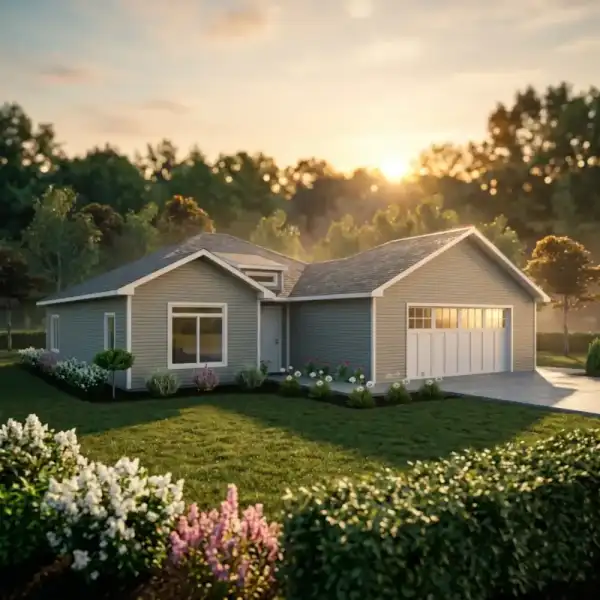
Taylor
1,680 sq ft · one level · 1 bed
Compact, with a 2-car garage
See the Taylor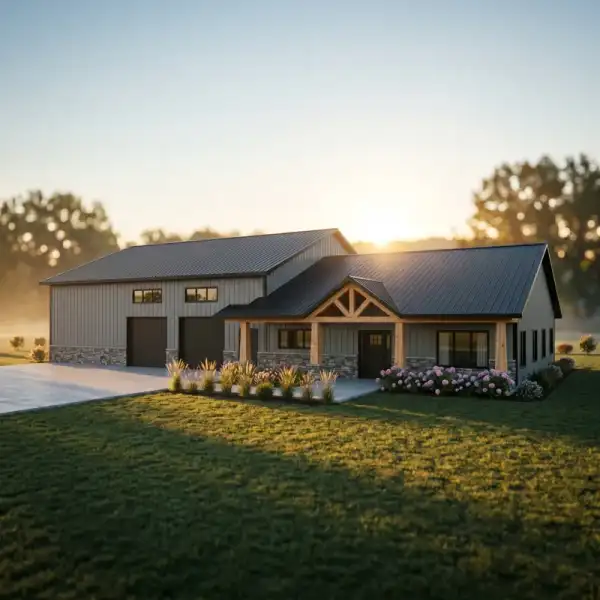
Oak
2,210 sq ft · one level · 3 bed
One level plus a 50x60 shop
See the Oak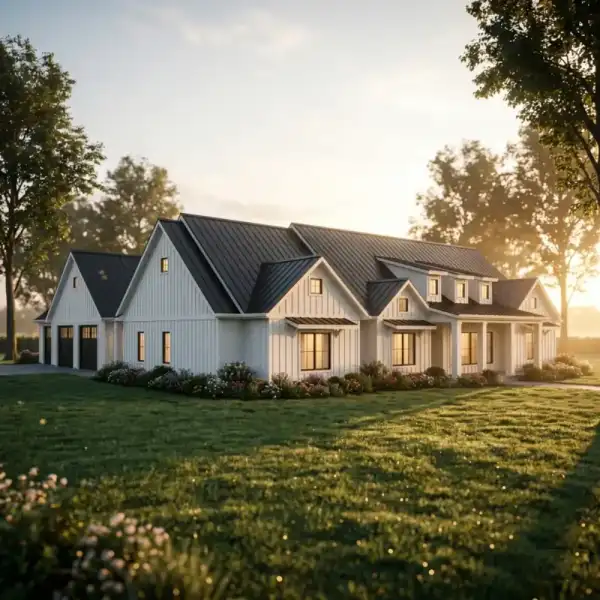
Jackson
2,814 sq ft · one level · 3 bed
Main-floor safe room and office
See the JacksonWHY SIP IN NEBRASKA: EXTREME HEAT AND COLD
Nebraska can see -20°F in winter and 105°F in summer, sometimes in the same year. Walls that hold up to that take more than batt insulation between studs.
Built for Big Temperature Swings
Winter lows can drop below -20°F in the Sandhills and Panhandle, and summer highs can top 105°F in the southeast. In a stud wall, every stud lets heat and cold through. SIP walls are solid foam between OSB skins, with R-26+ walls that keep your inside temperature steady.
Framed in About Half the Time
An independent RS Means study found SIP framing took 45 to 55% less time than stick-framing the same house. Once your site, panels and builder are in place, a local crew typically has the shell weather-tight in 3 to 5 days.
Stands Up to High Plains Wind
Steady prairie winds push cold air through gaps in stud walls. A SIP wall has no hollow cavities for wind to move through, so it keeps its insulating value on windy days. Frost depths get deeper as you head north and west, and your local building department sets the footing depth for your site.
Panels From Nearby Iowa
EPS cuts the panels at its factory in Graettinger, in northwest Iowa, so Nebraska sites get a fairly short flatbed run compared with many states we serve. Build season runs about April through October for most of the state.
NEBRASKA PERMITS: CHECK WITH THE COUNTY
We haven't verified county permit rules for Nebraska, and they change from one county and city to the next. Before you buy land, call the county (and the city, if the land is inside city limits) and ask these questions.
Ask the County (Rural Land)
Ask the City (Inside City Limits)
Your design package includes SIP engineering documentation for your county's permit office. Always confirm current rules with the county before you buy land.
NEBRASKA CITIES WE SERVE
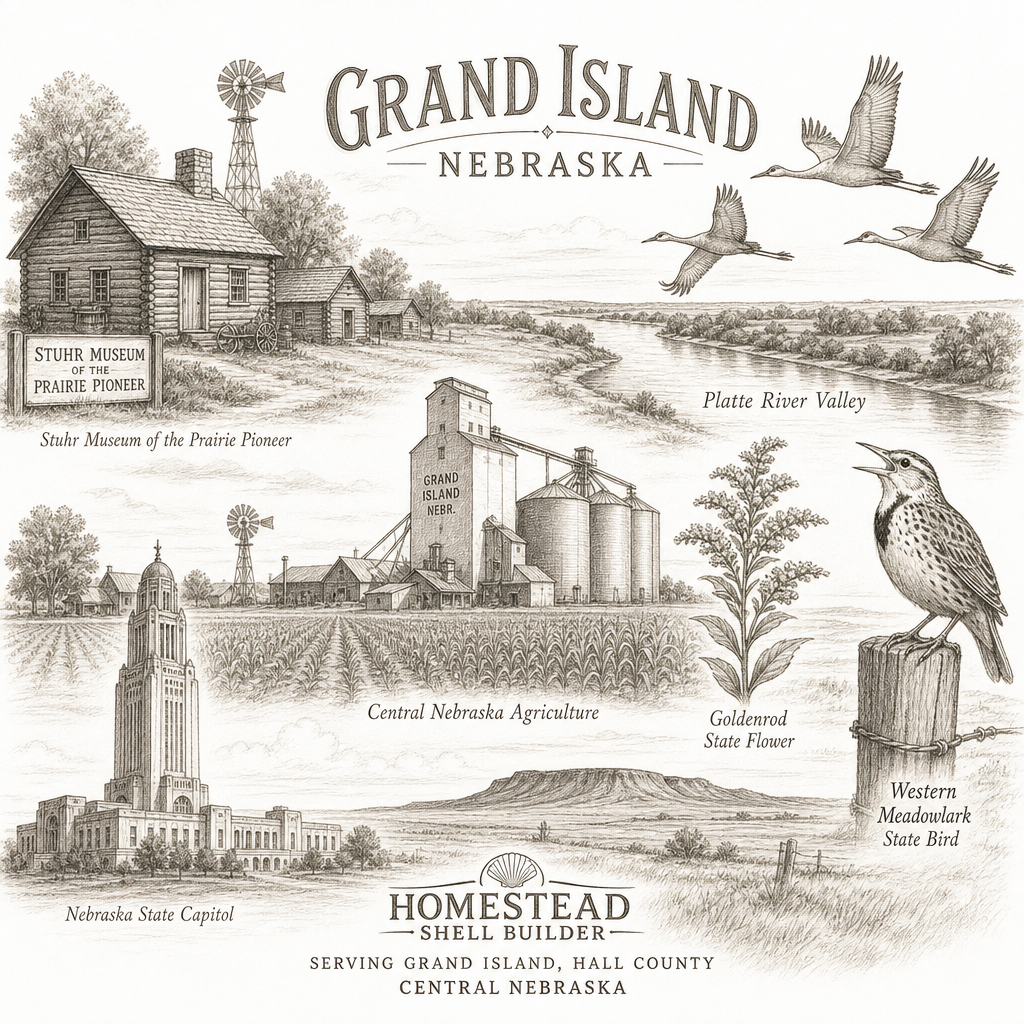
We design for land anywhere in Nebraska. Pick a city for local permit notes and county details.

FINANCING A HOMESTEAD SHELL IN NEBRASKA
You don't need a Missouri lender to work with us. Common paths for Nebraska land:
Local banks and farm credit lenders commonly offer construction-to-permanent loans for rural Nebraska projects.
Much of rural Nebraska is USDA-eligible. USDA's guaranteed loan offers no-down-payment financing, including a single-close construction-to-permanent loan through approved lenders, for households under the income limit. Check your land on USDA's map.
VA construction loans are another option; ask a VA-approved lender whether your project qualifies.
NEBRASKA QUESTIONS, ANSWERED
Do I need a permit to build a barndominium in Nebraska?+
It depends on where you build. Nebraska has a state building code based on the 2018 International codes, and cities and counties that run their own building programs must use it or a code close to it. What a permit involves depends on the city or county: some do plan review and inspections, others may ask only for a zoning permit, so ask the office that covers your parcel. The statewide energy code and state electrical rules still apply everywhere, so check with your county zoning office before you buy land.
Can I finish the inside of my shell home myself in Nebraska?+
Often, yes. Nebraska's State Electrical Act lets you wire your own principal residence without a license, but a new home with new electrical service needs a homeowner permit from the State Electrical Division, a rough-in inspection before drywall, and a final inspection. Cities and counties with their own electrical inspection programs, including Omaha, Lincoln, Grand Island and Douglas, Lancaster, Hall and Sarpy counties, issue those permits instead. Plumbing is licensed and permitted locally, and some cities, like Norfolk, let you plumb a home you own and live in or are building for yourself, so check with your city or county first.
Who drills and registers a private well in Nebraska?+
Private drinking water wells must be built to state rules, typically by a licensed water well contractor (there is a limited exception for landowners building their own well on land they live on or farm). State law requires a new well to be registered with the state within 60 days of completion, and the contractor (or the owner, if the owner built it) files the registration. Your local Natural Resources District (NRD) also has its own groundwater rules and requires a permit for larger wells over 50 gallons per minute, so call your NRD before you drill.
SEE WHAT YOUR NEBRASKA SHELL HOME COSTS
Start with your size. When the number makes sense, the next step is your design.
Nebraska builders and framing crews: join our contractor network to set factory-cut SIP shells.