

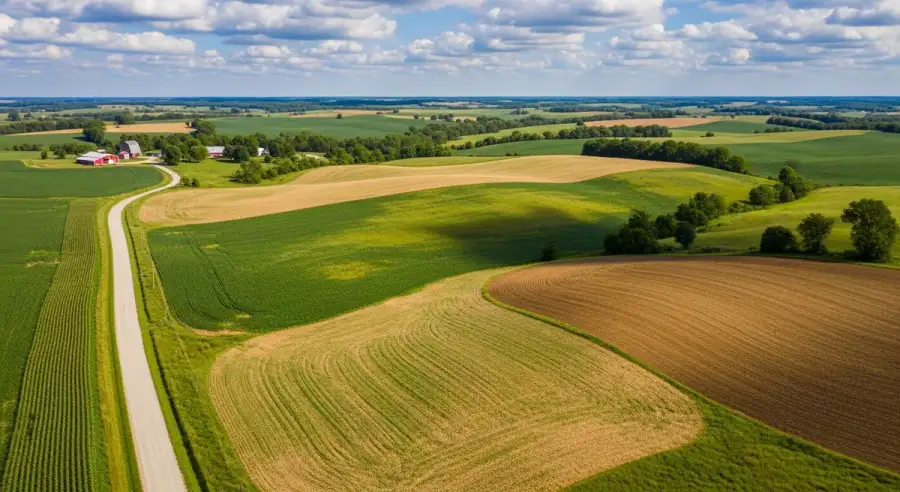
Missouri's Building Code Situation
Missouri is one of the most owner-builder friendly states in the country for a simple reason: there is no statewide residential building code. Residential building codes are entirely a local decision: each county and municipality decides whether to adopt code and which code to adopt.
The practical result: most rural Missouri counties have no adopted residential building code: 102 of 115 county entries in the state's 2021 data. In some of them there is no county zoning or building permit either (Nodaway, Harrison and Worth told us so in writing), so you can build without a county permit or inspection, subject to your lender's requirements and septic rules. Others with no code, like Ray and Caldwell, still require a building permit.
This creates enormous flexibility for owner-builders. It also creates real confusion about what the rules are, because the answer is genuinely different from one county to the next.
Northwest Missouri: The Best Owner-Builder Region
Northwest Missouri has the most established barndominium and rural residential building culture in the state, partly because of agricultural land availability, partly because of the area's long tradition of farm construction and DIY building, and partly because most of these counties have not adopted building codes.
The standout counties for owner-builders:
Andrew County
No adopted residential building code, no county zoning and no county building permit: the County Commission says the county "has no authority to issue building permits or occupancy permits." Septic goes through the Andrew County Health Department, which says residential lots of 3 acres or larger are generally exempt from its permitting process, except in certain situations. St. Joseph is about 20 minutes away.
Atchison County
No adopted code. Very low land prices for Missouri, with raw agricultural ground with building rights regularly available under $3,000/acre. The county told us in writing that it has no zoning and no county building permit; the only county permit is a floodplain permit for building in the floodplain. Excellent for owner-builders who want maximum freedom and affordability.
Nodaway County
No adopted code, and the County Commission told us in writing that there is no zoning ordinance and no building permit (Polk Township has had its own zoning, so check if your land is there). Maryville serves as the county seat with adequate services for rural building: lumber yards, concrete contractors, trades. Good rural land availability at reasonable prices.
DeKalb County
No adopted code. The county has no zoning authority of its own; Colfax, Washington and Grand River townships do their own zoning, so check which township your land is in. Septic goes through Missouri DHSS directly. FEMA lists DeKalb County as not in the National Flood Insurance Program. Ask the County Clerk about any county permit before you buy.
Daviess County
No adopted code in the state's 2021 data. Daviess County has a township form of government: there is no county comprehensive zoning, and the townships handle zoning. Septic goes through the Daviess County Health Department under its DHSS contract, and the Health Department told us in writing that Daviess County does not have countywide residential building codes and homeowners are allowed to install themselves. For other questions it points to the Daviess County Commission or the appropriate township, so ask them about any county permit before you buy.
Other Strong Owner-Builder Counties
Caldwell County
No adopted code. Excellent rural land availability between Kansas City and St. Joseph along US-36. Kingston and Hamilton offer basic services. The county requires a building permit and a septic permit for any new home, so budget for both.
Clinton County
No adopted building code, but Clinton County is zoned and requires a permit before you build a house. Its zoning order sets a 950 sq. ft. minimum home size, one primary residence per parcel and minimum lot sizes by district (20 acres in Agriculture District A). Cameron's growth has brought more lending options.
Ozarks Counties (Douglas, Ozark, Shannon, Carter)
All four list no adopted residential code in the state's 2021 data. Shannon and Carter told us in writing that they have no county zoning and no county building permit. Douglas County told us in writing that it doesn't have planning and zoning out in the county, and the state (DHSS Onsite Program) issues septic permits there; in Ozark County the Ozark County Health Department does, under a county ordinance. For Douglas and Ozark, ask the County Clerk about any county permit before you buy. The tradeoff across the region: more challenging terrain, rock that can raise foundation costs, and longer trips from suppliers.
Counties to Research Carefully Before Buying
Jackson County (Kansas City)
Jackson County is zoned and requires a building permit. Its Development Division enforces the 2018 IBC/IRC, 2017 NEC and 2018 UPC, a final inspection is required before occupancy, and electrical, mechanical and plumbing work must be done by a licensed tradesperson (Class A or B, or Class C under supervision). Cities inside the county have their own rules, so check with the city or the Development Division (816-881-4649) for your parcel.
Boone County (Columbia)
Boone County has adopted the 2015 IBC and IRC (plus the related 2015 codes and the 2014 NEC) with county addendums, and its zoning regulations cover all unincorporated land. A building permit is required, with site and setback inspections before permits are issued, and on-site wastewater needs its own permit with a soils evaluation. The county says homeowners can do their own work, and it will be inspected for code compliance. Minimum tracts: A-1 10 acres, A-2 2.5 acres, A-R 0.5 acre. Boone County Resource Management: (573) 886-4330.
Greene County (Springfield)
The state's 2021 data lists the 2012 IRC for Greene County, and the county told us in writing that it will be moving to the 2024 IBC, the 2024 Amended IRC and the 2023 National Electrical Code after December 31, 2026. Septic systems are permitted by the Resource Management Environmental Division ((417) 868-4147), which requires a site evaluation, a Greene County Soils Report by a qualified soil scientist and a professional system design, plus a floodplain development permit in Special Flood Hazard Areas. Check current zoning and permit rules with the county for any specific parcel.
What "No Building Code" Actually Means for Your Build
Being in a no-code county may remove county inspections, and in some counties the permit too. It does not remove your lender's requirements. Any lender financing your construction will typically require:
- Engineered drawings: Stamped by a licensed structural engineer, including foundation design with anchor bolt specifications. This is standard for SIP builds regardless of local code.
- Credentialed builder: Most lenders require your builder to carry general liability insurance and show experience. Missouri has no statewide general contractor license; some cities and counties license trades locally.
- Inspections at draw milestones: Lenders sending draws typically require a third-party inspector (a bank-hired appraiser or independent inspector) to verify that work is complete and materials are on-site before releasing funds.
None of this is a problem for a DreamStart Homestead Shell project. Engineered drawings are produced through the $9,750 design package, including a Walk Your Plans visit to walk your full-size floor plan and make final changes. DreamStart provides pre-construction documentation for its scope of work. But it's important to understand that "no local permit required" doesn't mean "no documentation required" when you're financing the build.
How to Verify Current Code Status
Code adoption can change. A county that had no code in 2023 may have adopted code in 2025. Before you purchase land with the intent to build, call the county Planning and Zoning office and ask these specific questions:
- Has the county adopted a residential building code for construction outside city limits?
- If yes, which code (IBC, IRC, local amendment) and when was it adopted?
- Are permits required for residential new construction on agricultural-zoned parcels?
- Are there setback requirements from road right-of-way and property lines?
- Are there minimum acreage requirements for residential construction on agricultural land?
Get the answers in writing if you're making a land purchase decision based on them. County staff answer correctly in almost all cases, but having the conversation documented protects you if information changes between your call and your permit application.
Missouri County Barndominium Builder Pages
DreamStart has a page for each county below. Where the county has confirmed its rules to us in writing or in its own documents, the page shows them; where it hasn't yet, the page tells you who to call. Either way, confirm with the county before you buy land.
- Andrew County: no county zoning or building permit
- Barry County: Barndominium Builder Guide
- Boone County (Columbia): 2015 IRC with county addendums, permit required
- Callaway County: Barndominium Builder Guide
- Camden County (Lake of the Ozarks): Barndominium Builder Guide
- Cass County: Barndominium Builder Guide
- Christian County: Barndominium Builder Guide
- Cole County (Jefferson City): Barndominium Builder Guide
- Dallas County: Barndominium Builder Guide
- Franklin County: Barndominium Builder Guide
- Greene County (Springfield): Barndominium Builder Guide
- Jasper County (Joplin): Barndominium Builder Guide
- Jefferson County: Barndominium Builder Guide
- Laclede County: Barndominium Builder Guide
- McDonald County: Barndominium Builder Guide
- Miller County: Barndominium Builder Guide
- Newton County: Barndominium Builder Guide
- Pettis County (Sedalia): Barndominium Builder Guide
- Polk County: Barndominium Builder Guide
- Pulaski County (Fort Leonard Wood): Barndominium Builder Guide
- St. Charles County: Barndominium Builder Guide
- Stone County: Barndominium Builder Guide
- Taney County (Branson): Barndominium Builder Guide
- Warren County: Barndominium Builder Guide
- Webster County: Barndominium Builder Guide
Building in a county not listed above? See our Missouri builder page. DreamStart designs for land in every Missouri county.