

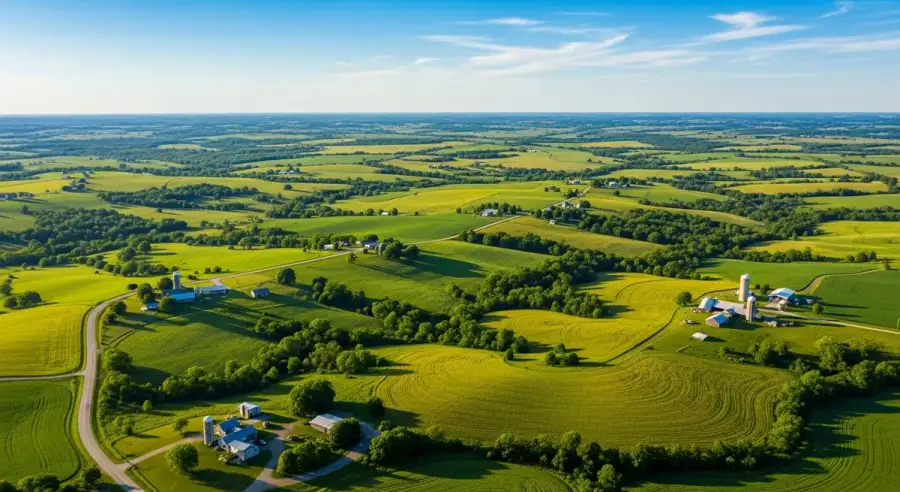
Why Missouri Is Different from Other States
Most states have a statewide building code adopted by all counties. Missouri is different. Missouri has no statewide residential building code. Each of Missouri's 114 counties (and St. Louis City) decides independently whether to adopt one, such as the International Residential Code, and most rural counties have not: the state's 2021 data lists an adopted residential code for only 13 of 115. This creates a patchwork that's genuinely complex: building in Buchanan County is a completely different regulatory experience from building in Andrew County, which is different again from Platte County or Clinton County.
The Three Categories of Missouri Counties
Category 1: Counties with Adopted Building Code (Full Permitting)
Most metro and near-metro counties fall in this category. Clay, Platte, Jackson, Boone (Columbia), Jefferson, Franklin and Cass counties have adopted residential codes in their own documents, and each of them requires a building permit for a new home. The state's 2021 data also lists an adopted residential code for St. Louis County, St. Charles, Greene (Springfield), Christian and Cole counties; ask those counties how their permit and inspection process works. Building in these counties isn't harder, just more documented, and that paperwork protects you.
Category 2: No Adopted Code, but Zoning and Permits
Many counties have no adopted building code but still have zoning and require a permit before you build. Buchanan County (St. Joseph) is one: no adopted residential code, but zoning districts with minimum acreage for a home. Ray County requires a building permit, platting and three inspections; Caldwell County requires a building permit and a septic permit; Clinton and Carroll counties are zoned and require a permit. Each county's rules are different, so read the county's own documents.
Category 3: No County Zoning or Building Permit
Some counties have no adopted building code, no county zoning and no county building permit outside city limits. Nodaway, Harrison and Worth counties told us so in writing in October 2026. Septic rules still apply: the county health department or the state (DHSS) handles septic permits, though some single-family lots may be exempt, so ask before you install one. Towns and townships inside these counties may have their own rules. This doesn't mean you can build anything: deed restrictions, your lender's requirements and common-sense structural safety all still apply.
The Zoning Question Is Separate from the Building Code Question
Even in counties with no building code, zoning restrictions can limit what you build. Agricultural zoning (A-1, A-2, AG) usually allows a primary residence, subject to the county's minimum acreage; that's the foundation of farm homestead rights in Missouri. But not every rural parcel is zoned agricultural.
Some rural land near population centers is zoned rural residential (RR), which typically allows barndominiums but may have specific setback requirements or exterior material standards. Some land has been subdivided into residential lots with deed restrictions that prohibit metal buildings. And some land near city limits may already be in the city's extraterritorial planning jurisdiction, subject to city code even though it looks rural. Always confirm both the zoning classification AND any deed restrictions before committing.
The Research Sequence: Before You Make an Offer
- Identify the parcel's county and township. The legal description in the listing will tell you. If the property spans a county line, research both counties. This is more common than you'd think on large rural parcels.
- Look up the county assessor's GIS website. Search "[county name] county Missouri assessor GIS." Most Missouri counties now have public parcel viewer systems that show zoning classifications, lot dimensions, and ownership information.
- Call the county Planning and Zoning office (or the county courthouse if there's no P&Z office) and ask three specific questions: Does this county have an adopted building code for residential construction outside city limits? What is the permitting process for a new residence on agricultural land? Who issues the septic permit?
- Confirm utility access. Rural electric co-op territory vs. investor-owned utility affects your hookup cost and timeline significantly. Well and septic feasibility varies by soil conditions and county health department requirements.
- Check for deed restrictions. Ask the title company to pull any recorded restrictive covenants before you close. Metal siding prohibitions and minimum square footage requirements are common in platted rural subdivisions even when the surrounding land has no such restrictions.
Northwest Missouri: County Planning Notes
DreamStart's planning work focuses on Buchanan, Andrew, Clinton, Caldwell, DeKalb, Nodaway, Atchison, and Holt counties in northwest Missouri. County rules are site- and jurisdiction-specific, so confirm current requirements directly with local officials:
- Buchanan County has no adopted residential code in its Zoning Order, but it is zoned and requires a building permit for any structure in every district. Minimum lot size is 20 acres in A-1 and 2 acres in A-OR. Septic systems are approved by the county Environmental Inspector.
- Andrew County has no county zoning, no county building permits and no adopted building code. Septic systems go through the Andrew County Health Department (lots of 3 acres or more are generally exempt).
- Clinton County is zoned under its Zoning and Subdivision Order and requires a permit to build a house, but the order does not adopt a building code. The Zoning Administrator issues septic permits, which must meet state (DHSS) rules, and homes in ag districts must be at least 950 sq ft. Still call and confirm your parcel's classification before any project commitment.
For counties we haven't worked in recently, we always call the P&Z office before we quote. The regulatory landscape changes faster than any published guide can track: a new county commissioner can change policy, a rural county can adopt the IRC with a single vote. The phone call takes ten minutes and it is always worth making.
Missouri County Barndominium Builder Pages
DreamStart has a page for each county below. Where the county has confirmed its rules to us in writing or in its own documents, the page shows them; where it hasn't yet, the page tells you who to call. Confirm with the county before you make an offer on land.
- Andrew County: Barndominium Builder Guide
- Barry County: Barndominium Builder Guide
- Boone County (Columbia): Barndominium Builder Guide
- Callaway County: Barndominium Builder Guide
- Camden County (Lake of the Ozarks): Barndominium Builder Guide
- Cass County: Barndominium Builder Guide
- Christian County: Barndominium Builder Guide
- Cole County (Jefferson City): Barndominium Builder Guide
- Dallas County: Barndominium Builder Guide
- Franklin County: Barndominium Builder Guide
- Greene County (Springfield): Barndominium Builder Guide
- Jasper County (Joplin): Barndominium Builder Guide
- Jefferson County: Barndominium Builder Guide
- Laclede County: Barndominium Builder Guide
- McDonald County: Barndominium Builder Guide
- Miller County: Barndominium Builder Guide
- Newton County: Barndominium Builder Guide
- Pettis County (Sedalia): Barndominium Builder Guide
- Polk County: Barndominium Builder Guide
- Pulaski County (Fort Leonard Wood): Barndominium Builder Guide
- St. Charles County: Barndominium Builder Guide
- Stone County: Barndominium Builder Guide
- Taney County (Branson): Barndominium Builder Guide
- Warren County: Barndominium Builder Guide
- Webster County: Barndominium Builder Guide
Don't see your county? Visit our Missouri builder page. DreamStart designs for land in every Missouri county, even when a dedicated county guide isn't published yet.