

The HERS Index:
How a Homestead Shell Can
Beat a "New" House
Most people understand MPG for cars but have no idea how to measure a house. The HERS Index fixes that, and DreamStart SIP shells are designed to score well on it.
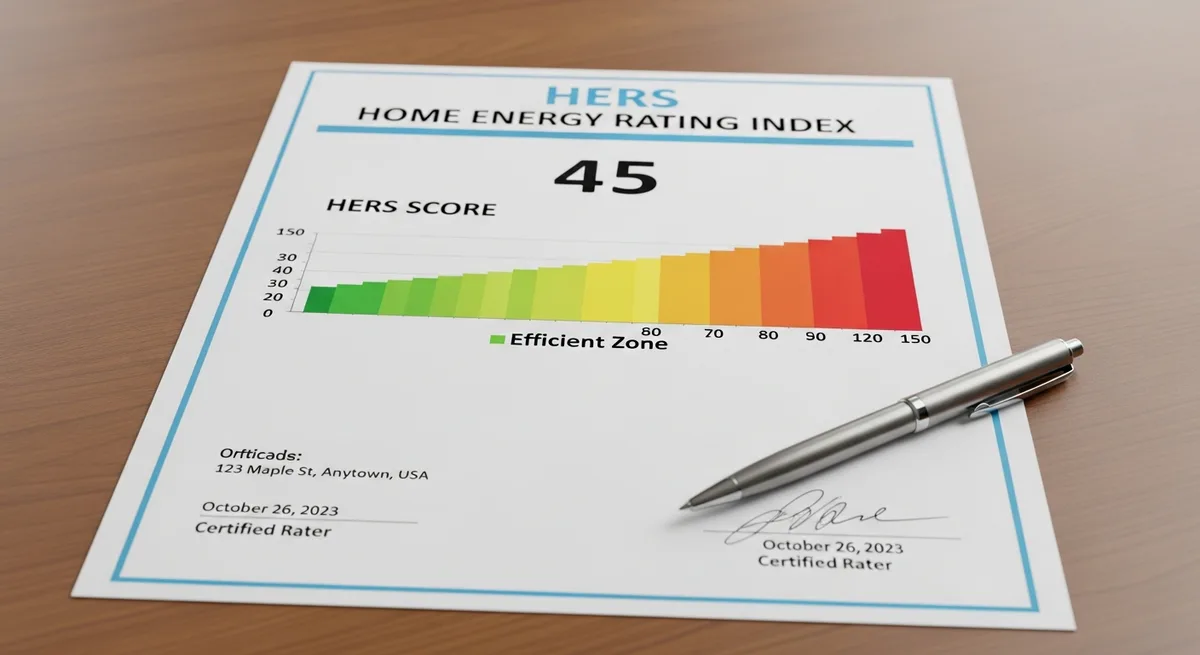
A SIP shell gives the finished home a strong start toward a score well below a code-built new home (HERS 100). A lower score means lower utility bills every month and a smaller HVAC system, and the certificate puts that in writing for appraisers and lenders.
Understanding the Scale (Lower Is Better)
The HERS Index is a national scale where 100 represents a "standard" new home built to 2006 energy codes. From there, lower scores mean more efficiency, and higher scores mean higher utility bills.
30% less efficient than a standard new house. Most older Missouri homes fall here.
The baseline. What your neighbor's new stick-built subdivision house probably scores.
Each point below 100 means about 1% less energy than the code baseline. A tight, continuously insulated shell is how a home gets here.
An independent rater scores the finished home. Ask for a projected score from your plans before you build.
A home that produces as much energy as it uses. Adding solar to a tight, efficient home is the usual path toward net zero.
Why SIP Shells "Hack" the HERS Scale
A HERS rater doesn't just look at your insulation. They perform a Blower Door Test to measure exactly how much air leaks out of your house. This is where SIP construction creates a dramatic, quantifiable advantage.
The Stick-Frame Leak
A standard framed house is roughly 15 times leakier than a SIP house. Even with good batt insulation, air escapes through every stud cavity, outlet penetration, top plate gap, and rim joist. None of that shows on the insulation spec sheet, but all of it shows up immediately on a blower door test.
This is also why stick-built homes with R-21 walls often test at effective R-values closer to R-12: thermal bridging through the studs eats your performance.
The Homestead Vault
Our Solid-Core SIP panels are essentially a continuous blanket of foam: no stud cavities, no thermal bridges, no top-plate gaps. The foam core wraps the building in a continuous insulated shell that does dramatically better on the blower door test.
Result: a tighter, continuously insulated shell, which is what moves a finished home's HERS score down.
The Financial Benefit: The "HERS Premium"
In 2026, a low HERS score is more than "feeling green." It's a quantifiable asset that shows up in three distinct ways.
Appraisal Value
A certified HERS score gives appraisers and future buyers your home's efficiency in writing, documented with a certificate, not just a sales pitch. How much value it adds depends on your market and your appraiser.
Mortgage Perks: Energy Efficient Mortgages (EEMs)
Some lenders offer Energy Efficient Mortgages that allow better rates or higher borrowing power specifically because your utility bills will be so low. The logic: a lower monthly energy burden means more room in the debt-to-income ratio.
Utility Programs
Some utilities run programs for efficient new homes, and they change from year to year. Ask your utility and your rater what's available; a certified HERS rating is the documentation those programs usually ask for.
Prove It, Don't Just Say It
A HERS rating applies to the completed home, not just its shell. An independent certified rater evaluates the whole building, including insulation, air leakage, windows, HVAC, and other systems; a panel package alone does not establish a score.
Efficiency at a Glance
| Home Type | HERS Score | Efficiency Level |
|---|---|---|
| Typical Resale Home | 130 | Poor |
| Standard New Home (Code) | 100 | Baseline |
| Finished SIP Home | Set by your rater | Below code |
| Net Zero Home | 0 | Net Zero |
Your Score Is Your Value
A barndominium should be a smart investment, not just a cool-looking building. By targeting a low HERS score, your Homestead Shell is more than "better." It's proven.
When it comes time to sell or refinance, you won't be arguing about your utility bills. You'll be handing over a certified document that proves how energy efficient your home is. That's the difference between a marketing claim and a verifiable asset.
Related Reading
About DreamStart
We used to build barndominiums and homestead shells with our own hands, and that experience is exactly what taught us where the real value lies: in getting the design right, planning the build carefully, and working successfully alongside local builders hired by owners. That hands-on experience helps us prepare clearer planning and handoff materials, but it does not make DreamStart the party choosing your contractor. DreamStart now operates as a pre-construction planner and design advisor, not a builder, general contractor, installer, or construction manager. We produce your custom drawings and documentation, coordinate engineering only when your county or lender requires it, and guide site-readiness and logistics. DreamStart designs the plans, organizes the steps, and quotes the EPS panel price; your local builder buys the panels directly from EPS at that price and sets them. We do not self-perform or include general-contractor labor, excavation, foundations, shell erection, utilities, or finish-out. That work is performed by your local builder and trades you retain, contract, and pay directly. We help you find a general contractor and hold a three-way interview, then hand off a clear written plan. DreamStart does not perform or manage field construction; each owner independently selects, contracts, pays and schedules their contractors. Verify the GC's qualifications, insurance, permit requirements, and lender requirements with the appropriate local authorities and your lender.
Take the Next Step
Ready to Price Your Homestead Shell?
DreamStart designs the plans, organizes the steps, and quotes the EPS panel price; the local builder you hire buys the panels directly from EPS at that price and sets them. Your GC handles construction. Get your custom estimate free, no obligation.