

What DreamStart Hands Off and What Comes Next
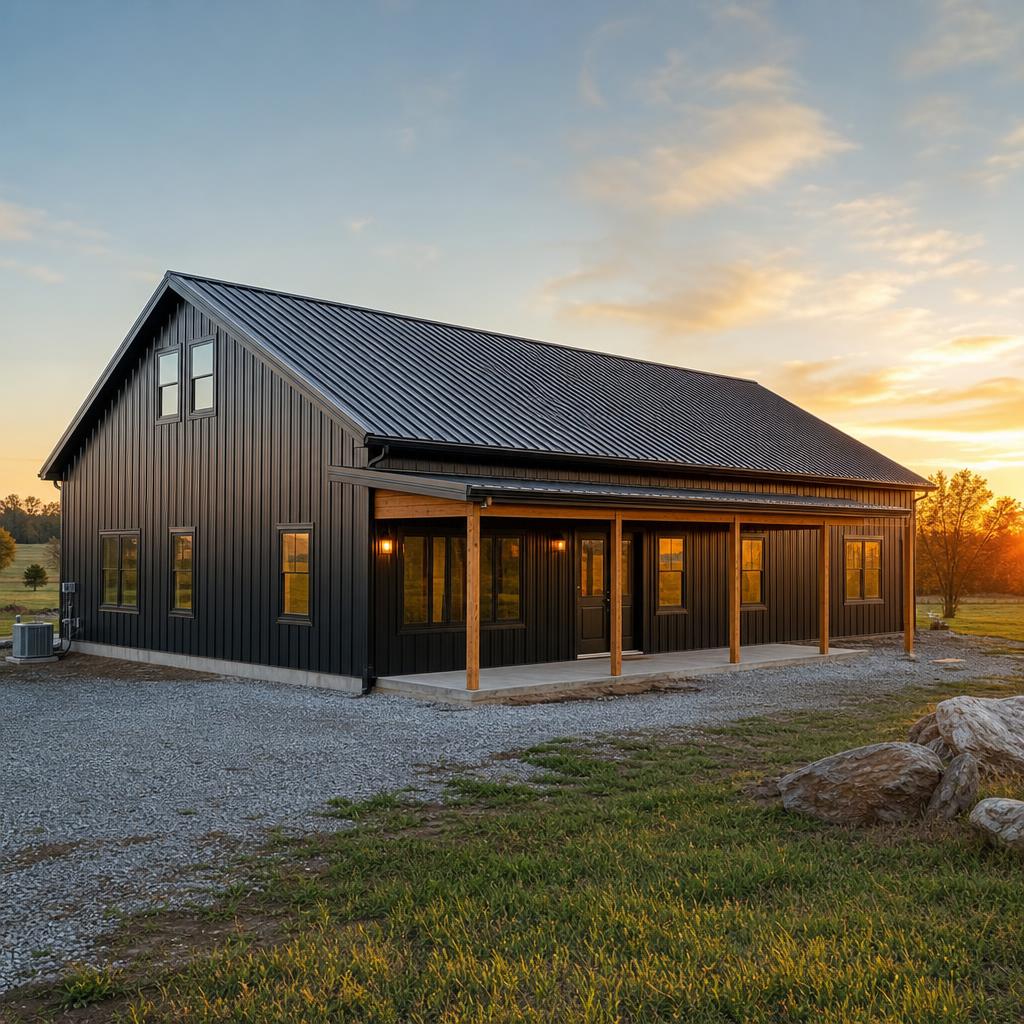
The local builder you hire may assemble your shell in 3–5 days once the slab and site are ready. Here's what DreamStart plans and arranges in advance, what the GC performs under your separate contract, and how you can prepare for the interior finish phase.
TL;DR: DreamStart designs the plans, organizes project steps, gets panels ordered and delivered, and provides site-readiness guidance and written handoff documentation. The local builder you hire sets the panels and performs shell assembly under a separate contract. Everything inside — framing, mechanical, drywall, fixtures, flooring — is your scope or work you separately contract. Have your mechanical trades scheduled before the shell goes up.
What DreamStart Provides Before Shell Assembly
In Scope at Weather-Tight Handoff
- Custom drawings and documentation (DreamStart)
- Engineering coordinated when your county or lender requires it (DreamStart)
- EPS panel order and delivery arranged by DreamStart for your GC to set
- Site-readiness and logistics guidance (DreamStart)
- Solid-Core SIP wall panels — factory-cut and delivered; erected by your local builder
- Metal exterior wall cladding, SIP roof panels with metal roofing (GC)
- All ridge caps, trim, and flashing (GC)
- Exterior windows and doors set in place — you supply them, the GC sets them
- Weather-tight, dried-in structure assembled by your local builder
Your Scope After Handoff
- Concrete slab (must be complete before DreamStart arrives)
- Interior partition framing
- Electrical rough-in and panel
- Plumbing rough-in (water supply and drain)
- HVAC system — mini-split or ducted
- Insulation details at SIP seams and penetrations
- Drywall (exterior SIP walls, then partitions)
- Interior doors, trim, and millwork
- Cabinets and countertops
- Flooring — concrete finish, LVP, tile
- Fixtures, appliances, and finish hardware
- Exterior grading, landscaping, and driveway
- Permits and inspections per your county
What "Weather-Tight" Actually Means
Weather-tight means the structure is protected from rain, wind, and temperature on the exterior. When your local GC crew leaves:
- All exterior SIP wall panels are set, cladded, and sealed at seams
- The metal roof is complete with ridge caps and all penetrations flashed
- Windows are set in their openings (exterior sill panned, frame in place)
- Exterior doors are hung and latch (weatherstripping may need adjustment during settling)
- Garage doors are set and operational
What "weather-tight" does not mean: window and door trim is not installed (that's finish work), caulk and paint on exterior seams may not be complete at every detail (some require cure time before finishing), and interior window and door jamb extensions are not installed.
The Three Things to Do Before the Crew Leaves
Walk the Shell With John (or the Crew Lead)
Before the crew demobilizes, walk every panel, every window, every door, and the entire roof line. Note anything that needs attention — a flashing detail, a door that doesn't latch cleanly, a panel seam that needs additional sealant. Get it addressed while the crew is still on site. After they leave, re-work requires scheduling a return trip.
Photograph Everything
Document the shell condition at handoff systematically: every exterior wall panel, every window installation, every roof penetration detail. These photos are your baseline record. If a question ever comes up during finish-out about the original installation, you'll have documentation. Photograph before the crew fully packs up.
Confirm Your Mechanical Trades Are Scheduled
You should have your electrician, plumber, and HVAC contractor committed before the shell goes up. At handoff, confirm their start dates are locked. In rural Missouri, mechanical trades can be booked 4–8 weeks out. If you haven't scheduled them yet, do it on day one of shell erection, not at handoff.
The Finish-Out Timeline: What to Expect
Finish-out timelines vary significantly based on how much the owner-builder does personally vs. subcontracts, and how quickly trades can be sequenced in their area. Realistic ranges:
| Scenario | Timeline to Move-In | Key Factor |
|---|---|---|
| Active owner-builder, trades scheduled 60 days before shell | 5–8 months | Personal availability and pre-planning |
| Full subcontract in rural Missouri, good trade relationships | 8–12 months | Trade sequencing and rural crew availability |
| Full subcontract, no pre-arranged trades, rural area | 12–18 months | Crew recruitment and scheduling gaps |
| Owner doing most of finish work personally (weekends) | 18–24 months | Personal schedule and learning curve |
What Support DreamStart Provides After Handoff
DreamStart's formal scope ends at the weather-tight shell, but our involvement doesn't completely stop:
- Engineering drawings stay active — contact us if your finish contractor needs documentation for a lender inspection or county permit
- Structural questions during finish-out: if your framing contractor has questions about partition placement relative to the ridge beam or SIP panel structural details, we can answer them
- Documentation your local builder or finish trades can use — We help you find a general contractor and hold a three-way interview, then hand off a clear written plan. DreamStart does not perform or manage field construction; each owner independently selects, contracts, pays and schedules their contractors.
- SIP-specific questions: wiring chase locations, panel seam details, thermal barrier requirements — we know our product
Want to understand the full scope before you commit? The instant calculator gives you your shell price in under a minute. A free discovery call with John walks through exactly what's in scope, what's out, and what your finish plan needs to look like.
Frequently Asked Questions
What does DreamStart provide for a Homestead Shell project?
DreamStart designs the plans, organizes project steps, gets SIP panels ordered and delivered, and provides site-readiness guidance and written handoff documentation. The independent general contractor you select and contract sets the panels and performs shell assembly. DreamStart is not a general contractor and does not perform on-site construction.
Does DreamStart do any construction or interior finish work?
No. DreamStart is not a general contractor and does not self-perform GC labor, excavation, foundations, shell assembly, utilities, or finish-out. DreamStart's scope is plans, project-step organization, panel order and delivery, readiness guidance, and written handoff. The local builder you hire sets the panels and performs shell assembly; interior partition framing, electrical, plumbing, HVAC, drywall, flooring, cabinets, and finishes are owner-builder scope or work you contract separately.
What are the first three things to do after your local builder completes shell assembly?
Walk the shell with the crew lead to identify any punch list items before they demobilize. Photograph everything systematically. Confirm your mechanical trades (electrician, plumber, HVAC) are scheduled — they should be locked in before the crew even arrives.
How long does it take to go from shell to move-in ready?
For owner-builders with trades pre-arranged: 5–8 months. For full-subcontract in rural Missouri: 8–18 months depending on trade availability. Owner-builders doing most of the finish work personally often take 18–24 months.
Does DreamStart provide any support after the shell is delivered?
Yes — engineering documentation for lender inspections, structural questions during finish-out, and SIP-specific technical questions (wiring chases, thermal barrier, panel seam details). We help you find a general contractor and hold a three-way interview, then hand off a clear written plan. DreamStart does not perform or manage field construction; each owner independently selects, contracts, pays and schedules their contractors.
Post-Shell Handoff Series · 5 of 5
Back to the beginning
How to Prep Your Slab for a SIP Shell Delivery
About DreamStart
We used to build barndominiums and homestead shells with our own hands — and that experience is exactly what taught us where the real value lies: in getting the design right, planning the build carefully, and working successfully alongside local builders hired by owners. That hands-on experience helps us prepare clearer planning and handoff materials, but it does not make DreamStart the party choosing your contractor. DreamStart now operates as a pre-construction planner and design advisor — not a builder, general contractor, installer, or construction manager. We produce your custom drawings and documentation, coordinate engineering only when your county or lender requires it, and guide site-readiness and logistics. DreamStart designs the plans, organizes the steps, and gets the EPS panels ordered and delivered at the quoted package pricing for your local builder to set. We do not self-perform or include general-contractor labor, excavation, foundations, shell erection, utilities, or finish-out — that work is performed by your local builder and trades you retain, contract, and pay directly. We help you find a general contractor and hold a three-way interview, then hand off a clear written plan. DreamStart does not perform or manage field construction; each owner independently selects, contracts, pays and schedules their contractors. Verify the GC's qualifications, insurance, permit requirements, and lender requirements with the appropriate local authorities and your lender.
Take the Next Step
Ready to Price Your Homestead Shell?
DreamStart designs the plans, organizes the steps, and gets the EPS panels ordered and delivered at the quoted package pricing for the local builder you hire to set. Your GC handles construction. Get your custom estimate free, no obligation.