

Can You Use a Wood Stove in a SIP Home? The Honest Answer
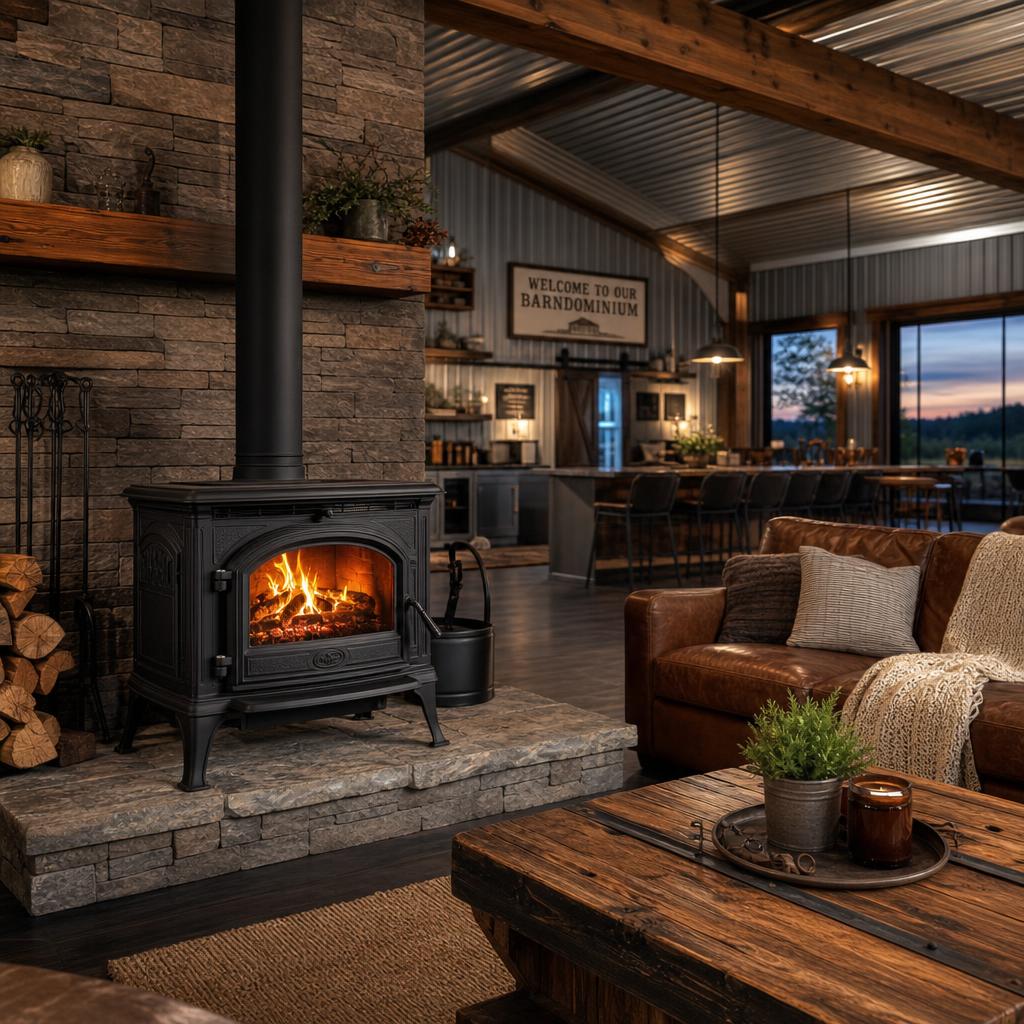
Yes — you can install a wood stove in a SIP Homestead Shell. But there's one issue that most wood stove installers don't know to look for in airtight homes, and getting it wrong creates a dangerous situation. This is the issue, and here's how to do it correctly.
TL;DR: Wood stoves work in SIP homes. The critical requirement: SIP homes are airtight, so you must provide a dedicated outside combustion air supply to the stove — passive air from building leakage doesn't exist in a SIP structure. Use a Class A chimney through the SIP roof, maintain manufacturer clearances, and size your stove for the actual heat loss of a high-insulation building.
The Combustion Air Problem in Airtight Homes
Conventional wood stoves are designed to draw combustion air from the room through natural building leakage. In a stick-built house with a leaky envelope — gaps at windows, outlets, penetrations — there's a constant passive air supply that feeds the fire.
SIP homes are different. The closed-cell EPS foam and OSB panels create a nearly airtight envelope. When you light a wood stove in a SIP home without a dedicated outside air supply, here's what happens:
Stage 1: The stove draws from interior air
Works initially, but interior air pressure drops as oxygen is consumed
Stage 2: Negative pressure builds inside the house
The tight envelope has nowhere to make up the air deficit
Stage 3: Draft weakens as pressure equalizes
Combustion slows, smoke production increases, flame becomes lazy
Stage 4: Backdrafting
Flue gases reverse direction and enter the living space — carbon monoxide hazard
This isn't a SIP-specific failure — it happens in any airtight home, including tight stick-built with spray foam. The solution is straightforward: install a dedicated outside combustion air supply.
The Solution: Outside Combustion Air
A dedicated outside combustion air supply gives the stove its own air intake path from exterior to firebox, bypassing the interior entirely. This eliminates the depressurization problem. There are two ways to do this:
Directly Connected Outside Air Kit
Many modern EPA-certified wood stoves have a factory outside air kit that connects a 4" or 6" duct from the exterior directly into the stove's firebox. This is the cleanest solution.
- Sealed system — no interior air used
- Maintains interior positive pressure
- Available on most quality EPA stoves
Room Air Supply Duct
A 6" duct from exterior terminates near (but not at) the stove, within the same room. This supplies combustion air to the room, not directly to the firebox.
- Works with any stove, no factory kit required
- Brings cold air into the room in winter
- Must be dampered when stove is off
“The combustion air issue is the thing installers miss in SIP homes. A wood stove installer who learned their trade in stick-built houses has never had to worry about this — the house always leaked enough air. SIP homes don't. Always specify outside air.”
John Piazza Norton — Founder, DreamStart Building Company
Chimney Through a SIP Roof: What's Required
Running a Class A chimney through a SIP roof panel requires a listed penetration with the correct clearance to combustibles. The process:
- Use Class A double-wall or triple-wall chimney only — no single-wall or B-vent through a roof
- Maintain the manufacturer's listed clearance to combustibles (typically 2" air space from OSB and foam)
- Install a listed fire stop and support box at the ceiling/roof level
- Use a listed storm collar and cap at the exterior
- Coordinate chimney location during the design phase — DreamStart can include a framed opening in the SIP panels
If you're adding a wood stove after the shell is erected, a chimney contractor can cut the penetration through the SIP roof panel and install the support kit. The foam doesn't create any special difficulty — it cuts cleanly and the listed support box handles the fire separation.
Clearances to SIP Walls
A wood stove near a SIP wall must maintain the manufacturer's listed clearances to combustible surfaces. SIP walls with their drywall covering are treated as combustible assemblies for clearance purposes — the drywall alone isn't the limit; you're measuring from the face of the wall.
You can reduce clearances with listed wall protectors. The most common options:
Air-Spaced Masonry (brick or tile)
Reduces required clearance by up to 2/3 per NFPA 211
Most traditional-looking option; adds weight — verify your floor can handle it
Listed Reflective Heat Shield
Reduces clearance by 50–66% depending on listing
Lighter, faster to install, available in steel or decorative finishes
Sizing: Don't Oversize for a SIP Home
SIP homes have dramatically lower heat loss than stick-built of the same square footage. A wood stove sized for a 2,000 sq ft stick-built house will be massive overkill in a 2,000 sq ft SIP Homestead Shell — and an oversized stove is actually harder to run efficiently, because you'll damper it down to avoid overheating, which produces more creosote.
Ask your wood stove supplier to size based on your building's actual heat loss, not square footage rules of thumb. A rough guide: SIP homes typically need 50–60% of the BTU output that a stick-built house of the same size would require.
Planning your heating strategy for your SIP shell? Use the instant calculator to get your shell price, then book a call — we can talk through heating options for your specific floor plan and climate zone.
Frequently Asked Questions
Can you install a wood stove in a SIP barndominium?
Yes. Wood stoves work well in SIP homes. You need a listed wood stove, Class A chimney, manufacturer clearances maintained, and a dedicated outside combustion air supply. The outside air supply is the critical SIP-specific requirement most installers miss.
What is the combustion air problem with wood stoves in airtight homes?
SIP homes are airtight — no passive combustion air from building leakage. Without a dedicated outside air supply, the stove depressurizes the house as it burns, causing poor draft and eventually backdrafting of flue gases. Provide outside air directly to the stove or the room.
Do SIP walls need special protection near a wood stove?
Use the stove manufacturer's listed clearances — SIP walls with drywall are treated as combustible assemblies. Clearances can be reduced with listed wall protectors (air-spaced masonry or reflective shields). No SIP-specific clearance multiplier applies.
How do you route a chimney through a SIP roof panel?
Use Class A chimney only, with listed penetration hardware maintaining 2" clearance to combustibles. Coordinate the chimney location during the design phase so DreamStart includes a framed opening in the SIP panels. The foam cuts cleanly and the listed support box handles fire separation.
Is a wood stove a good primary heat source for a SIP barndominium?
It can be, but most customers pair a wood stove with a mini-split as backup — mini-splits provide consistent temps when you're away and prevent freeze damage. A SIP home's low heat loss means a properly-sized wood stove can heat the space for hours on a single load.
Post-Shell Handoff Series · 4 of 5
Read next in series
What DreamStart Hands Off and What Comes Next
About DreamStart
We used to build barndominiums and homestead shells with our own hands — and that experience is exactly what taught us where the real value lies: in getting the design right, planning the build carefully, and working successfully alongside local builders hired by owners. That hands-on experience helps us prepare clearer planning and handoff materials, but it does not make DreamStart the party choosing your contractor. DreamStart now operates as a pre-construction planner and design advisor — not a builder, general contractor, installer, or construction manager. We produce your custom drawings and documentation, coordinate engineering only when your county or lender requires it, and guide site-readiness and logistics. DreamStart designs the plans, organizes the steps, and gets the EPS panels ordered and delivered at the quoted package pricing for your local builder to set. We do not self-perform or include general-contractor labor, excavation, foundations, shell erection, utilities, or finish-out — that work is performed by your local builder and trades you retain, contract, and pay directly. We help you find a general contractor and hold a three-way interview, then hand off a clear written plan. DreamStart does not perform or manage field construction; each owner independently selects, contracts, pays and schedules their contractors. Verify the GC's qualifications, insurance, permit requirements, and lender requirements with the appropriate local authorities and your lender.
Take the Next Step
Ready to Price Your Homestead Shell?
DreamStart designs the plans, organizes the steps, and gets the EPS panels ordered and delivered at the quoted package pricing for the local builder you hire to set. Your GC handles construction. Get your custom estimate free, no obligation.