

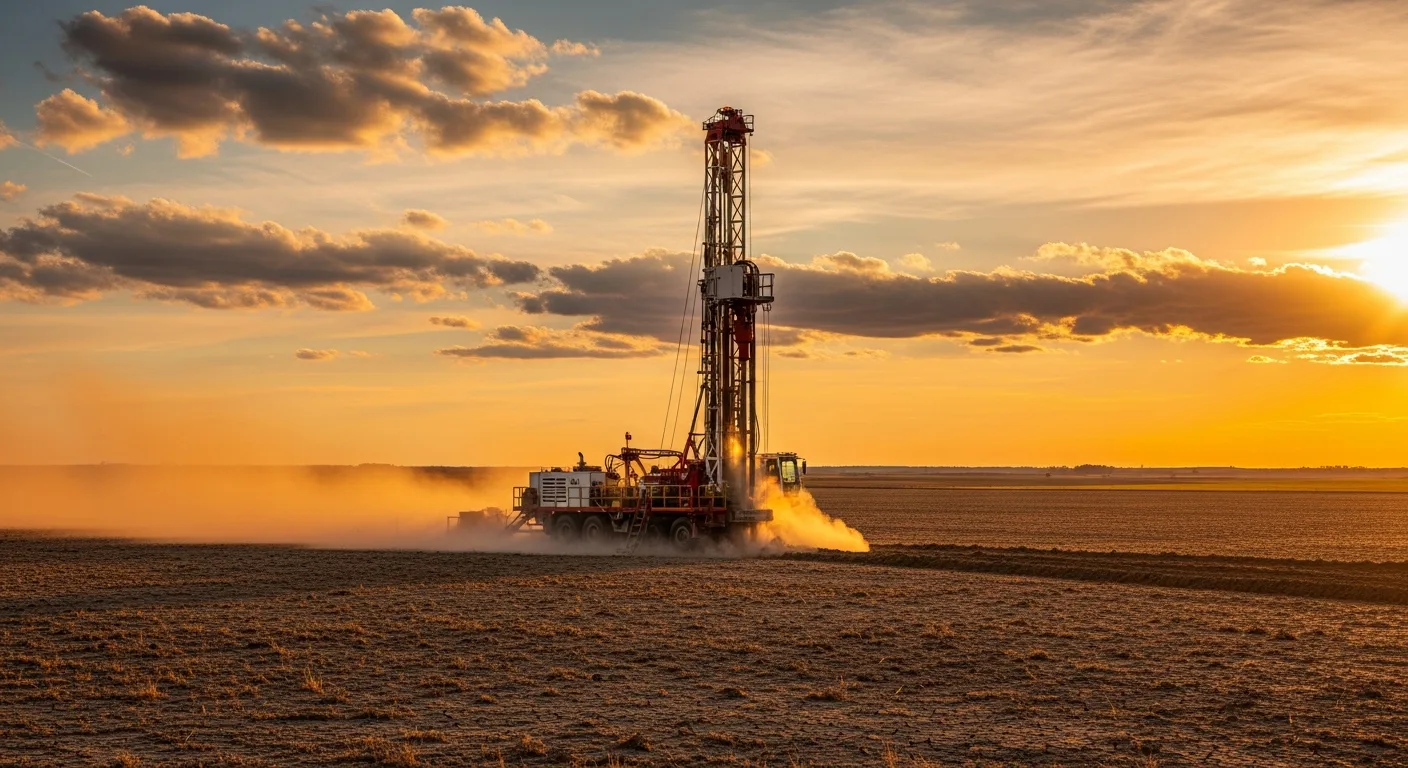
Why Rural Water Planning Is Non-Negotiable Before You Buy Land
Every Missouri barndominium built outside a municipality needs a private water source. In most rural counties, that means a drilled well. Unlike septic systems, which most buyers at least know to ask about, water systems are frequently ignored until the project is well underway. That's a mistake that can delay your build by months and add costs that weren't in your budget.
The variables that matter most (drilling depth, water quality, and well yield) are site-specific. A neighbor's 150-foot well tells you almost nothing about what your parcel will require. Hydrogeology changes across very short distances in Missouri, particularly in areas underlain by limestone karst formations, and only a licensed well driller can assess your specific location.
What Well Drilling Costs in Missouri (2026 Numbers)
Missouri well drilling costs are primarily driven by depth, and depth varies significantly by region:
- Northwest Missouri (Platte, Clay, Clinton, DeKalb, Buchanan counties): Wells typically reach water at 80 to 200 feet. Total installed cost (drilling, casing, pump, pressure tank) runs $6,000 to $10,000 for a standard residential well.
- Central Missouri and Ozarks: Limestone and dolomite formations often require 200 to 400 feet of drilling. Costs in the $10,000 to $18,000 range are common.
- Northeast Missouri: Glacial drift aquifers can produce good water at relatively shallow depths (60 to 150 feet), keeping costs lower at $5,500 to $9,750.
These figures include the well itself, casing, pump, and a basic pressure tank. They do not include water treatment, softening equipment, or pressure booster systems, which many rural Missouri properties need.
Missouri Water Quality: The Limestone Problem
Missouri groundwater is predominantly hard, rich in calcium and magnesium from the limestone and dolomite formations that underlie most of the state. Hardness levels of 15 to 25 grains per gallon (gpg) are common in many rural counties. For context, anything above 10.5 gpg is classified as "very hard" by the Water Quality Association.
Hard water at those levels causes visible scale buildup on fixtures, reduces water heater efficiency by 25 to 30%, shortens appliance lifespans, and makes washing and bathing noticeably different. A water softener should be specified into every rural Missouri barndominium's utility plan from day one. It's not optional in most of the state.
Beyond hardness, rural wells can present iron, hydrogen sulfide (the rotten egg smell), bacteria, and nitrate contamination. Nitrates are particularly important in agricultural areas where fertilizer application is heavy. Always get a comprehensive water test from a certified laboratory within 30 days of well completion. Budget $150 to $300 for a proper panel that covers bacteria, nitrates, pH, hardness, iron, and sulfates.
The Components of a Complete Rural Water System
A well is just the source. A complete system includes several components that need to be sized and specified correctly for your household's water demand:
- Submersible pump: Sized based on well yield (gallons per minute) and the distance water needs to travel. A standard residential pump delivers 5 to 10 GPM.
- Pressure tank: Stores pressurized water and reduces how often the pump cycles on. Undersized pressure tanks cause premature pump failure. For a barndominium with a shop, size up to at least a 44-gallon tank.
- Whole-house sediment filter: 5-micron cartridge filter installed before the pressure tank inlet catches sand and particulates that can damage pump components and fixtures.
- Water softener: Essential for most Missouri groundwater. Size based on household capacity (grains of hardness x daily gallons used). A properly sized softener for a 4-person barndominium handles 40,000 to 60,000 grain capacity.
- UV sterilizer or chlorination system: If bacteria is detected or suspected (common in properties near agricultural operations), UV treatment is the most reliable whole-house approach.
- Reverse osmosis at the kitchen sink: For drinking water quality above what the whole-house system provides. A 4-stage RO system runs $300 to $600 installed.
For drinking water without power or well pressure, here's the gravity water filter we recommend.
Rural Water Districts: The Alternative to a Private Well
In some Missouri counties, rural water districts provide piped water to properties that would otherwise need private wells. Coverage varies dramatically: some districts serve dense areas well, while others have significant gaps.
Before assuming you need a well, contact your county's rural water district to check service availability to your specific parcel. If the district serves your address, connection costs typically run $1,500 to $4,000 (tap fees plus line extension if needed), and you'll have a metered monthly water bill rather than the upfront capital cost of a well. The tradeoff: you're dependent on the district's infrastructure and have no backup during outages.
Many barndominium buyers who have rural water district access still drill a well for irrigation, shop water, and livestock, keeping domestic water on the district and heavy-use water on the well. This hybrid approach is worth considering if your project includes significant agricultural or livestock use.
How to Find and Vet a Licensed Well Driller in Missouri
Missouri requires well drillers to be licensed by the Department of Natural Resources (DNR). You can verify a driller's license status through the Missouri DNR's online license lookup. Always use a licensed driller. Unlicensed wells don't meet Missouri construction standards, can't be properly recorded on the property title, and can create legal complications at resale.
Get at least two bids. Ask each driller: what depth do they typically see on properties similar to yours in that township? What formation do they expect to encounter? What's their policy if they reach your budget depth without hitting adequate yield? A good driller gives you honest answers based on local experience, not guarantees they can't keep.
Plan well installation during your site preparation phase (ideally before your barndominium slab is poured) so the driller has full access to the site and you're not working around finished construction. The pressure tank and treatment equipment are installed in your mechanical room during the rough-in phase, after framing is complete.
Timing Your Well in the Construction Sequence
The well itself should be drilled during site prep, before the slab. The pump, pressure tank, and treatment equipment are installed during rough-in (after the SIP shell is up and the mechanical room is accessible). Plumbing rough-in and water system installation happen in the same phase as electrical rough-in and HVAC ductwork.
Don't wait until your shell is complete to schedule the driller. Good drillers in northwest Missouri are often booked 4 to 8 weeks out, especially during spring building season. Get on their schedule when you break ground.