

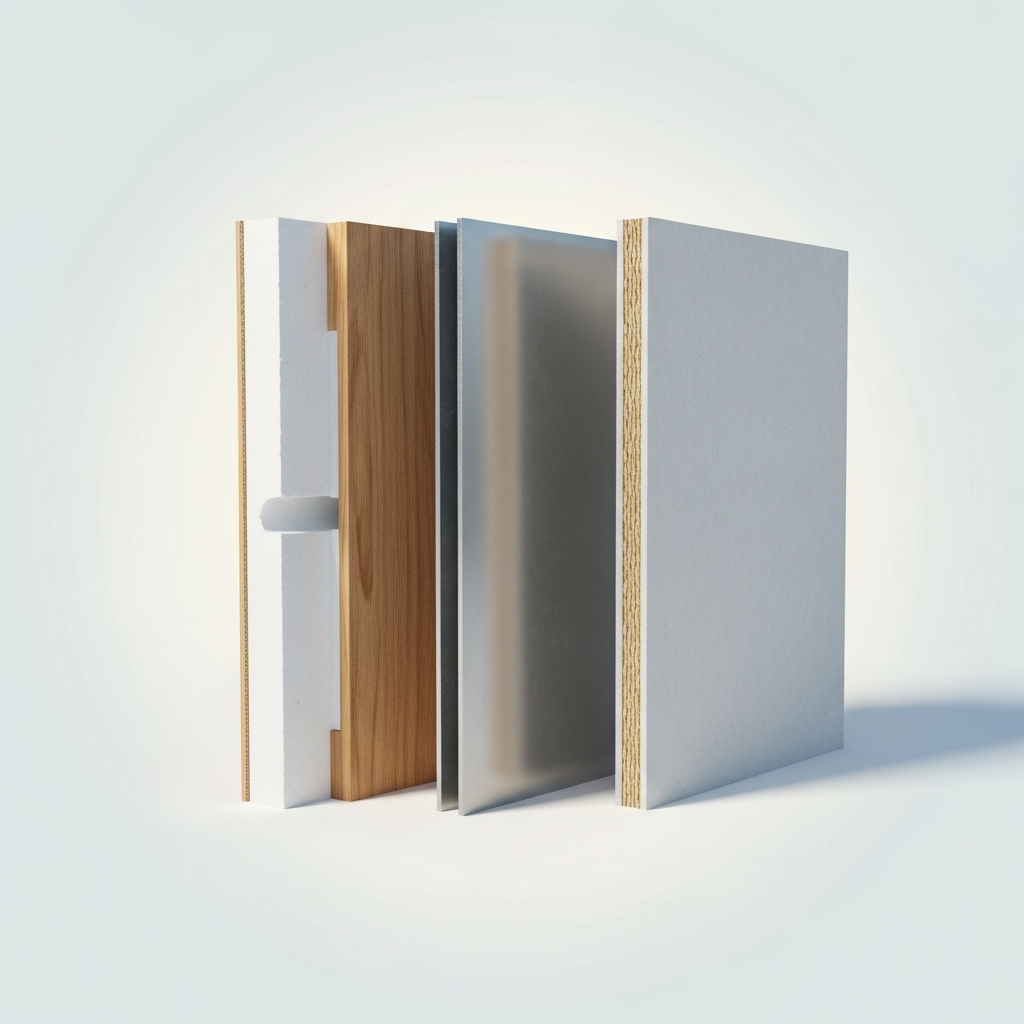
Why This Comparison Matters
If you're evaluating panelized building systems, you've probably run into three different core technologies: EPS (expanded polystyrene) foam structural insulated panels (the system DreamStart plans around; your builder buys the panels directly from EPS at the price DreamStart quotes), steel-faced foam panels, and MgO (magnesium oxide) foam panels. Every manufacturer's website reads like the best option on the market. Here's the honest, side-by-side breakdown, with the deepest focus on fire performance, because that's the question I get asked the most and the one where I have the least reason to spin the answer.
The Three Systems at a Glance
EPS Foam SIP: A rigid EPS foam core laminated between two structural facings (typically OSB), used as the wall, roof, and floor system. This is the technology behind our Homestead Shell system. It's the most widely manufactured and used SIP technology in North American residential construction, with decades of building-code history behind it.
Steel-Faced Foam Panels: A foam core (often EPS or similar) sandwiched between two light-gauge steel skins instead of OSB. The steel skins add tensile strength and let the panel act as combined framing, insulation, and sheathing in one piece.
MgO Foam Panels: A foam core paired with magnesium oxide board facings instead of wood or steel. MgO board is an inorganic, cement-like material. It doesn't burn, doesn't feed mold, and doesn't feed insects.
Quick View: Who Wins Each Category
Before the deep dive, here's the fast version. This is the chart I'd want if I were shopping three panel systems and didn't have time to read 2,000 words. On a phone, swipe sideways to see the full table.
| Category | EPS Foam SIP | Steel-Faced Foam | MgO Foam | Winner |
|---|---|---|---|---|
| Fire performance | Combustible core, protected by code-required interior gypsum barrier | Non-combustible steel skin over a combustible foam core | Non-combustible board; the wall material itself won't burn | MgO, not close |
| R-value (typical wall panel) | R-26+ at 6.5" | Often R-30+ at thicker profiles | Comparable to EPS core R-value at similar thickness | Depends on thickness; no clean winner |
| Moisture / mold / pest resistance | Good with proper flashing; OSB facing can be vulnerable if moisture management fails | Steel skin resists rot/insects; foam core still needs protection | Inorganic board doesn't feed mold or insects | MgO |
| Wind / structural rating | Proven in Midwest tornado-prone regions; meets applicable wind-load codes | Purpose-engineered high-wind and hurricane-rated versions available | Marketed for storm resistance; less structural track record in U.S. homes | Steel-Faced (coastal/hurricane zones) |
| Cost per square foot | Most competitive of the three | Premium pricing, often commercial/coastal-focused | Premium pricing | EPS SIP |
| Dealer network / track record | Decades of U.S. residential code history, wide dealer network | Smaller footprint, often specialty/commercial | Smaller footprint, newer to U.S. residential market | EPS SIP |
R-values and structural ratings vary by manufacturer and panel thickness. Confirm current specs and test documentation directly with any manufacturer before comparing numbers.
Fire Performance: The Real Breakdown
This is the question that matters most, so I'm going to give it to you straight instead of protecting my own product.
MgO panels win on fire performance, and it isn't close. The board facing itself is non-combustible: it will not ignite, will not burn, and will not add fuel to a fire. That's a physical property of the material, not a marketing claim. An MgO wall doesn't need a protective layer to resist fire; it resists fire because of what it's made of. If fire resistance is the one factor you care about most, MgO is the answer.
Steel-faced foam panels have a non-combustible steel skin, which is a real advantage: steel doesn't burn and helps contain surface flame spread. But underneath that skin is typically a foam core, and foam is combustible unless something is protecting it. Steel manages what happens on the surface. It doesn't change what's underneath if that assembly gets compromised.
EPS foam SIP, our system, uses a combustible foam core, same as most panel systems on the market including steel-faced foam. The way we address that, and the way residential code requires it to be addressed, is with an interior thermal/fire barrier (almost always 1/2" gypsum wallboard) installed over the foam on the interior side of every wall and ceiling. That's not optional. It's IRC/IBC code, and it's the same fire-protection principle used in most homes built in America, wood-framed or SIP-framed, because wood framing is combustible too. A correctly built EPS SIP home meets the same fire code as a stick-built house. But "meets code" and "is made of something that can't burn" are two different standards.
The honest summary: MgO wins on fire resistance decisively: no added barrier required, and no dependency on installation quality or on the wall staying intact. Steel-faced sits in the middle: a non-combustible skin over a combustible core. EPS SIP relies on the same code-mandated gypsum barrier that protects nearly every home in the country. All three, properly built, pass the same fire inspections, but only one of them is made of a material that simply doesn't burn.
R-Value and Energy Efficiency
All three systems significantly outperform standard stick-frame batt insulation. The exact R-value comparison is less clean than it looks on a spec sheet, though, because manufacturers spec different panel thicknesses. Our EPS SIP walls run R-26+ at a typical 6.5" residential wall thickness, with roof panels reaching R-40+. Steel-faced and MgO manufacturers sometimes publish higher R-numbers, but that's frequently because they're quoting thicker panels than a standard residential EPS wall panel. Thickness drives R-value more than the core material does. What actually matters is delivered HERS performance, and that's where I'd tell you to stop reading spec sheets and ask for the certificate. Our Homestead Shell system can score well below a code-built stick home on the HERS Index.
Wind and Structural Performance
Steel-faced panels are marketed with strong wind ratings, including hurricane-rated versions engineered for high wind speeds and flying debris, a real advantage if you're building on the coast. MgO panels are also marketed for storm resistance, though with less of a structural track record in U.S. residential construction specifically. EPS SIP construction is a proven structural system across tornado-prone regions of the Midwest, including our own Missouri market, and meets the wind-load codes for the areas we serve. If you're building in a designated hurricane zone, ask the steel-panel manufacturer directly for their wind-load engineering documentation. That's their strength, not ours.
Moisture, Mold, and Pest Resistance
MgO has a genuine edge here. Magnesium oxide is inorganic, so it doesn't feed mold or mildew if moisture gets in, and it's naturally resistant to insects and termites. Steel-faced panels share part of that advantage (steel doesn't rot or feed insects), though the foam core and any wood trim can still be vulnerable if moisture management fails. EPS SIP with OSB facing performs well when properly flashed and detailed. In practice, moisture problems in any SIP system almost always trace back to installation and flashing, not the core material. But EPS SIP doesn't have the inherent inorganic advantage MgO has.
Cost and Availability
This is where EPS SIP pulls ahead for most buyers. It's the most widely manufactured panel technology in U.S. residential construction, with a large nationwide dealer and factory network, decades of adopted building-code precedent, and the most competitive cost per square foot of the three systems. Steel-faced and MgO panel systems are typically positioned at a premium price point, often serving commercial, coastal, or specialty applications where their specific advantages (hurricane rating, non-combustible facing) justify the added cost. For most residential owners working to a defined budget, EPS SIP is the strongest balance of performance and cost.
Off-Gassing and Indoor Air Quality
MgO panels are marketed as producing no off-gassing, with no added VOCs or formaldehyde in the board material. Modern EPS foam is also widely recognized as low off-gassing once cured, and OSB facings are manufactured to current formaldehyde emission standards. Steel-faced panels are similarly low-VOC given the steel and foam composition. In practice, indoor air quality across all three systems is driven more by your interior finish choices (paint, flooring adhesives, cabinetry) than by which structural panel is behind the drywall.
The Honest Bottom Line
If fire resistance is your top priority, MgO panels are the best system on the market for it: a wall material that genuinely doesn't burn, and that beats both steel-faced and EPS foam construction on this one factor. If you need certified high-wind or hurricane performance, steel-faced panels have engineering built specifically for that. If you want the most cost-effective, code-proven, widely available panel system with a multi-decade residential track record, that's EPS SIP, and it's why DreamStart specifies it and quotes the panel price; your local builder buys the panels directly from EPS at that price and sets them.
Whichever system you're evaluating, ask every manufacturer for their actual fire-test documentation and code compliance reports instead of relying on marketing claims, including ours. We're glad to hand ours over during your design phase.